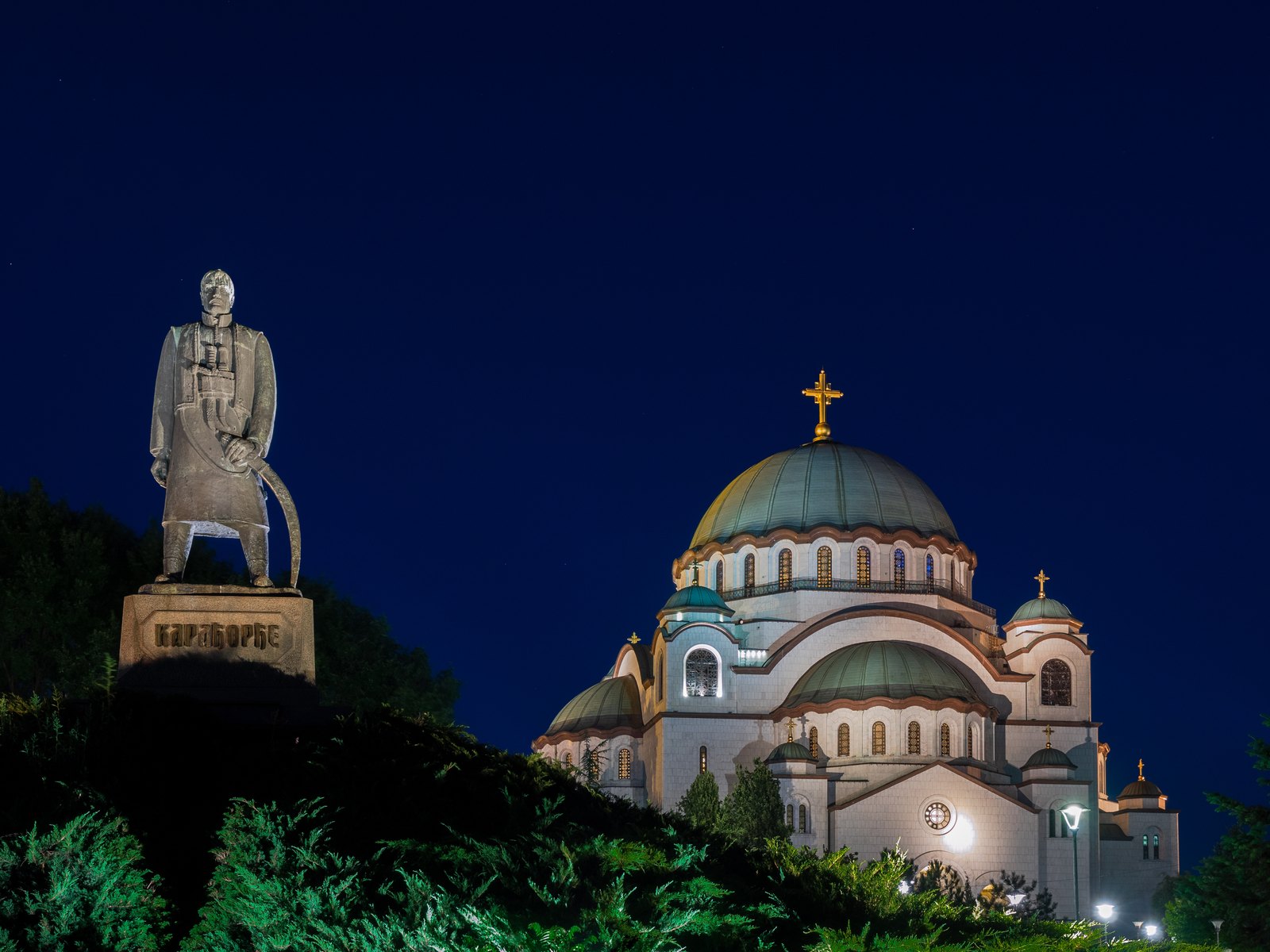
BELGRADE — Patriarch Porfirije opened this year's regular session of the Holy Assembly of Bishops of the Serbian Orthodox Church with an address centered on táxis, the canonical order of ecclesial life, and a pointed caution against allowing the Church to be governed by "passing pressures, media-created divisions, or artificially produced conflicts." The Assembly met at the Memorial Saint Sava Temple on Vračar from May 13 to 19, 2026, with twenty-four bishops concelebrating the opening Hierarchical Divine Liturgy.
On Táxis and Conciliar Order
In his welcoming address, the Patriarch grounded the work of the Assembly in conciliar tradition rather than reactive deliberation. "In the Church, none of us lives as an isolated individual, nor is anyone the owner of the ministry and gift entrusted to him," he said. "Each serves in the Body of Christ, in communion, in obedience, within his own rank and in the place entrusted to him." He went on to characterize táxis not as "a chain imposed upon freedom, but a reflection of the Divine Logos in the order of creation and the life of the Church," and freedom in the Church not as self-will but as "service in truth and love."
The Diaspora Dioceses
The Assembly devoted particular attention to the pastoral ministry of hierarchs in the diaspora, with specific focus on circumstances in the dioceses of the Serbian Orthodox Church in the United States, Australia, and the British Isles. Reports were heard and analyzed. The communiqué records no further action concerning those dioceses.
In Parma, Ohio, the practical questions remain on the ground. Fr. Dragoslav Kosić has not returned church property since October. The parish registers, the household register, the ecclesiastical books, and the seal of Saint Sava Cathedral remain in his possession seven months after his canonical transfer.
The Diocese of Žiča
Where the Assembly did move administratively, it moved openly. After a detailed review of the situation in the Diocese of Žiča, including its material and financial administration and the question of the responsibility of the diocesan bishop, the Assembly relieved Metropolitan Justin of further administration of that diocese, citing the need to restore regular ecclesiastical and legal order. The contrast with the diaspora paragraph is itself instructive: the Assembly demonstrated that it acts by named decision when it finds cause, and that the receipt of reports without further action carries its own canonical meaning.
Further Remarks, and Other Business
The Patriarch's caution against media-driven pressure reads as a broader admonition to a Church increasingly observed through social platforms and partisan outlets. "The people of God, the clergy, and monastics await the voice of the Assembly with attention and hope," he said, "and therefore it is our duty not to be led by passing pressures, media-created divisions, or artificially produced conflicts, but to preserve the freedom of ecclesial discernment."
The Assembly also canonized the nun Jefimija of Devič, known popularly as Blessed Stojna, adopted a new Regulation on Theological Seminaries, elevated the Higher School of Arts and Conservation to the rank of a faculty under the name Despot Stefan Lazarević, and reaffirmed its concern for the Diocese of Raška and Prizren in Kosovo and Metohija. New members of the Holy Synod were elected for the coming term.
The official communiqué of the Holy Assembly of Bishops is available at: https://easterndiocese.org/news/2960/communique-of-the-holy-assembly-of-bishops/