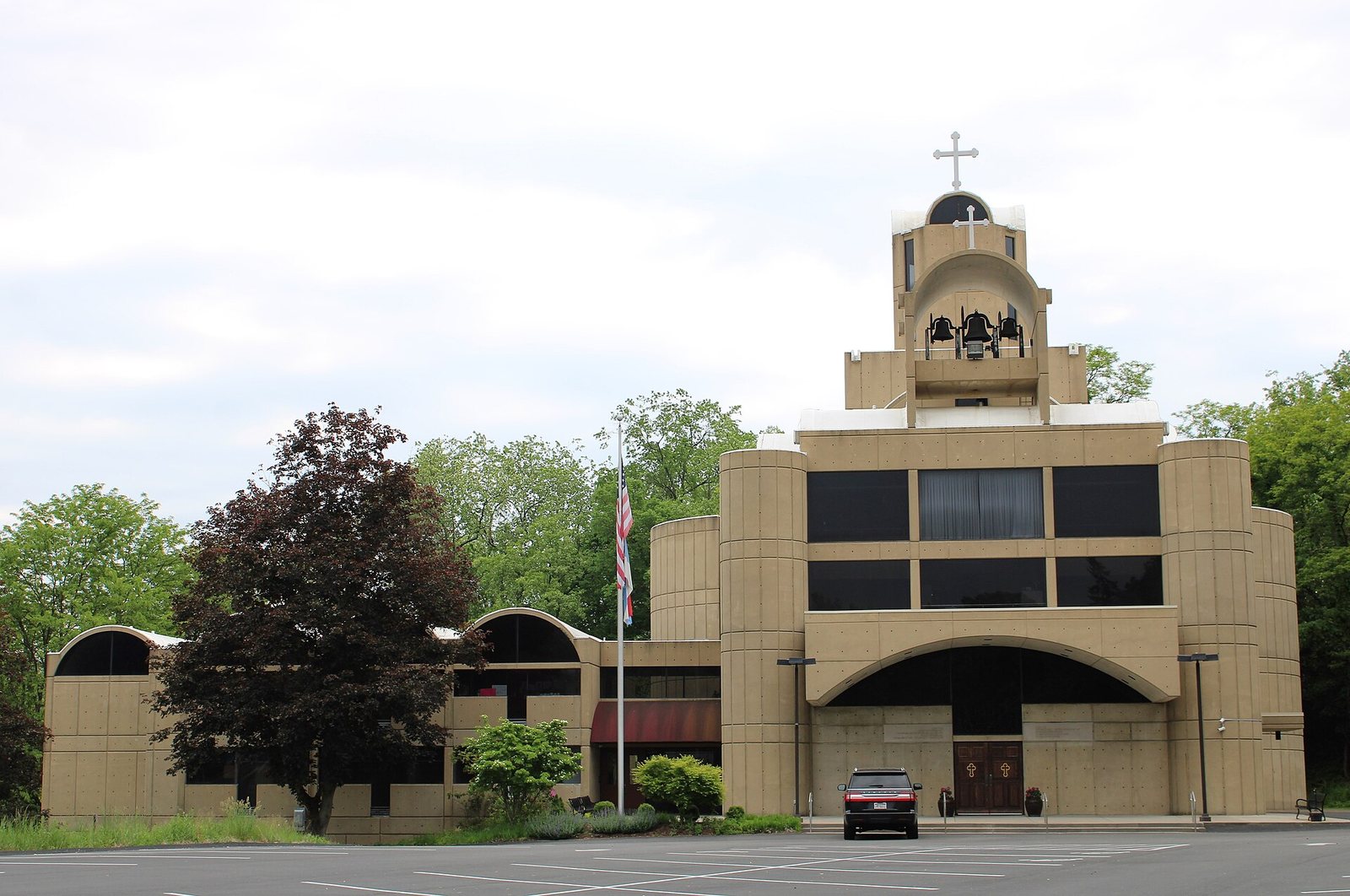
PARMA, Ohio — This week the Serbs of the Diocese of Eastern America were told, from Novi Sad, that they are afraid. A Facebook post signed by Vladimir Mojsilović said the clergy and people in America were frightened, and that the faithful had had enough of "living in fear." It named Cleveland. It did not name a single person here who had asked him to speak.
The post, titled "Istočno od raja" ("East of Paradise"), appeared on the Facebook page of Pokret Svetosavlje, a group based in Novi Sad. Beneath his signature Mojsilović tagged Miholjski Zbor, an association in Montenegro, the Serbian-Russian Center Majak in Belgrade, and Majak's director, Vladimir Prebiračević. Majak lists Mojsilović as a special adviser. The post was directed at Bishop Irinej of Washington–New York and Eastern America. This publication does not repeat its accusations.
I. Speaking for us
Most of the post was written as though from inside the diocese. It described the clergy and people in America as frightened. It said the faithful, the clergy and the monastics were tired of "living in fear." It called the dispute "not only a local question" of Shadeland, Marcha or Cleveland, naming two of the diocese's own places and Cleveland. Saint Sava Cathedral stands in Parma, just outside Cleveland. Then it stopped talking about America and asked whether Belgrade had the "courage, resolve and will."
Mojsilović holds no place in the diocese, and he will never have to see its people in person. Nothing in the post shows that he asked any of its priests or people what they think. He wrote about them for readers in Serbia, on a page in Novi Sad.
Anyone is free to criticize a bishop. This post went further. It spoke for Serbs in America without asking them, and it called for the dispute to be settled "with a sword." If anyone acts on that, it is people here who will get hurt, not anyone in Novi Sad.
The Serbs of this diocese have never needed an outsider to speak for them. The diocese's parishes stretch across fifteen states and the District of Columbia, from New York to Florida and west to Indiana. In November 2021, at Holy Trinity Cathedral in Pittsburgh, they marked a hundred years since the founding of the first Serbian Orthodox diocese in the United States and Canada. Bishop Irinej served with four other hierarchs and more than forty priests and deacons, and the Serbian ambassador to the United States attended. A century of Serbian church life in America was built here, by the people who live here, in their own name.
The post wrote about the Serbs of America as if they were the only people in these churches. They are not. Saint Sava Cathedral in Parma belongs to the Serbian Orthodox Diocese of Eastern America. Macedonians, Ukrainians and Americans who became Orthodox stand there at the same Liturgy as Serbian families. Almost everyone in an American parish, or their parents or grandparents, came from somewhere else. The Church has never asked where, nor should it.
The protest at Saint Sava presents itself as the defense of a Serbian church against its own bishop. But Saint Sava is a cathedral of Bishop Irinej's diocese. Boki Lemajić, one of the protest's organizers, is himself half Serbian and half Croatian. Some of its loudest members, men who identify as Chetniks, do not speak Serbian. There is nothing wrong with either, and the Church does not ask. But people in that position should be the last to tell a bishop elected by the Assembly of the Serbian Orthodox Church that he is "not Belgrade's bishop," as Lemajić did in September.
II. The call for a sword
The post did not stop at describing the Serbs of America. It also told them what should be done. It said the time had come to cut the matter "with a sword." It called the matter a question of the survival of the faith and "a fight for life or death," and regretted that the problem had not already been solved "in some traditional way." In the first comment beneath it, Mojsilović wrote that nothing would be settled until "the causes of the disease are removed."
Beneath the post, readers went further, in words of their own. They urged others to take a stick to the bishop and leave him barefoot for the rest of his life. Around those calls, the thread filled with insults and slurs aimed at him. When the thread was captured for this article, those comments were still up.
Little else in the post was new. Many of its specific claims, down to the use of the bishop's baptismal name in place of his title, had already appeared in Lemajić's September reply, which this publication examined at the time. Few people in Serbia have heard of Shadeland or Marcha; Lemajić wrote about both. One of the claims, about the Bishop's 2006 consecration, this publication checked against the Church's own records in September, and it did not hold up. The post said it spoke for the Serbs of America. What it repeated was one man's post from Parma. The only thing it added was the call for a sword.
III. The names beneath it
The organizations Mojsilović tagged have done better work than this. Miholjski Zbor gave money to a soup kitchen and a kindergarten in Kosovo, and in 2021 the president of the Gračanica municipality thanked it in person. In February 2023 it collected €20,257 for earthquake victims in Syria, in an appeal that Pokret Svetosavlje joined. Mojsilović tagged them on a post that called for a sword. Whether they stand behind it is for them to say.
The Serbs of America speak for themselves. They have a bishop, parishes in fifteen states, and a century of their own church life. Nothing in the post shows that anyone in the diocese asked Mojsilović to call for a sword in their name, or asked for the comments beneath it telling people to take a stick to their bishop.
Saint Sava Cathedral in Parma is part of the Serbian Orthodox Diocese of Eastern America.
Sources and Further Reading
- Pokret Svetosavlje, "Istočno od raja," Facebook post signed by Vladimir Mojsilović, October 2026, with comments. Screenshots held by Orthodox Integrity.
- Serbian Orthodox Diocese of Western America, "Pan-Orthodox Liturgy Honors Centennial of the First Diocese of the Serbian Orthodox Church in North America," November 2021. https://westsrbdio.org/?p=21003
- Serbian Orthodox Eparchy of Eastern America, overview of parishes and territory. https://en.wikipedia.org/wiki/Serbian_Orthodox_Eparchy_of_Eastern_America
- Majak, team roster and biographies. https://majak.rs/ko_smo_mi/
- Večernje novosti, "Zahvalost za pomoć i brigu o deci sa KiM: Predsednik Opštine Gračanica u poseti Tivtu," August 1, 2021. https://www.novosti.rs/vesti/politika/1022942/zahvalost-pomoc-brigu-deci-kim-predsednik-opstine-gracanica-poseti-tivtu-foto
- Metropolitanate of Montenegro and the Littoral, "Miholjski zbor predao ambasadi Sirije novčanu pomoć od preko 20.000 evra," February 20, 2023. https://mitropolija.com/2023/02/20/miholjski-zbor-predao-ambasadi-sirije-novcanu-pomoc-od-preko-20-000-evra/