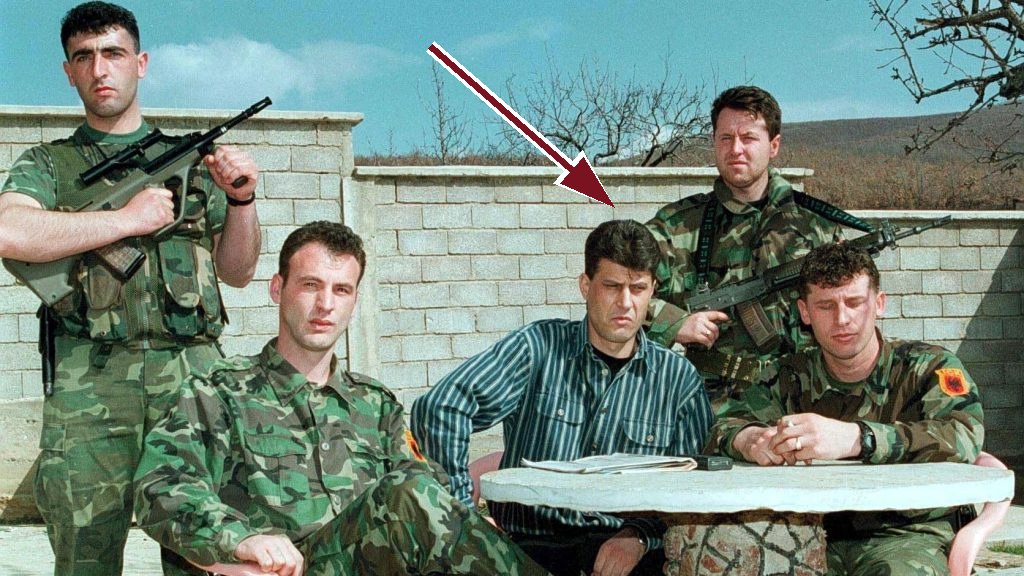
PRIŠTINA, Kosovo, Sept. 19. Two days after the Kosovo Specialist Chambers sentenced Hashim Thaçi and three former Kosovo Liberation Army commanders to between 13 and 25 years in prison, Aidan Hehir of the University of Westminster wrote in a Sept. 18 column for Kosovo 2.0 that Kosovo Albanian anger over the verdict "should be directed towards Western embassies, especially those of 'the Quint.'"
I. The people the column leaves out
Hehir studies transitional justice for a living. On Sept. 16 the judges found the defendants responsible for the murder of 96 people the KLA held as political opponents or suspected collaborators. The murders were only part of the judgment. The judges also found that 385 people were unlawfully detained, 303 tortured and 49 subjected to cruel treatment in KLA detention sites, Kosovo Albanians, Serbs and Roma among them, according to Human Rights Watch. Their families waited more than a quarter century for that finding, and the column does not mention them once.
All four defendants were acquitted on the crimes against humanity counts, the judges finding that prosecutors had not proved a widespread and systematic attack on civilians. The abductions of Serbs, Roma and others in 1998 and 1999 were left without a finding that they were systematic, and many of those families are still searching for the missing.
II. The four men, and the army they led
Hashim Thaçi went into the war as political director of the KLA General Staff, known inside the organization by the nom de guerre Gjarpëri, the Snake. He led the Kosovo Albanian delegation at the Rambouillet talks in February 1999, became prime minister of the provisional government that summer, and founded the Democratic Party of Kosovo. He was prime minister from 2008 to 2014 and read the declaration of independence on Feb. 17, 2008. He was president of Kosovo when the court confirmed the indictment against him in November 2020. He resigned that day and flew to The Hague.
The three men sentenced with him carried the same double record. Kadri Veseli ran the KLA's intelligence branch during the war and the service that succeeded it afterward, and was speaker of the Assembly from 2014 to 2019. Rexhep Selimi sat on the General Staff as inspector general and later took a seat in the Assembly for Vetëvendosje, the party of Albin Kurti. Jakup Krasniqi was the KLA's spokesman, the voice that announced its operations to the press, and went on to serve as speaker of the Assembly and as acting president of Kosovo in 2010 and 2011.
The army they came from, the Ushtria Çlirimtare e Kosovës, grew out of clandestine cells in the Drenica valley and claimed its first attacks in 1996. It armed itself largely from Albanian army depots looted during the collapse of the Albanian state in 1997, and financed itself through a diaspora levy called Vendlindja Thërret, Homeland Calling. In February 1998 the American envoy Robert Gelbard said in Priština that the KLA was "without any question a terrorist group." Thirteen months later the United States seated its political director at the head of the Albanian delegation at Rambouillet, and NATO went to war on the same side. The KLA disbanded in September 1999, and its commanders moved into the Kosovo Protection Corps, the police, the ministries and the Assembly.
Human Rights Watch documented the other half of that record in 2001: abductions, detentions and killings carried out by KLA units against Serbs, Roma and Albanians regarded as collaborators, during the war and in the months after it ended. The judgment of Sept. 16 reaches back through the four careers to what the General Staff did in those months.
III. Where the court came from
Hehir wrote that the court was "obviously designed to demonstrate to Belgrade that the West was now its friend." The court grew out of a Council of Europe report by the Swiss senator Dick Marty, adopted in January 2011, which described KLA detention sites in northern Albania and identified a KLA faction known as the Drenica Group, which it said Thaçi led. Robert Muharremi, a law professor at the Rochester Institute of Technology in Priština, traced the creation of the court directly to the Marty report and its allegations, organ trafficking among them.
Before that, the Hague tribunal indicted Fatmir Limaj in 2003 and Ramush Haradinaj in 2005, at the height of Western goodwill toward Kosovo. Haradinaj was acquitted twice. Part of his case had to be retried because the trial court failed to secure testimony from witnesses who were afraid to speak. That is why the new court sits in The Hague and not in Kosovo. Sara Ochs and Kirbi Walters, writing in the Duke Journal of Comparative and International Law in 2022, concluded that the court was structured to minimize "the very real threat of political interference and witness tampering."
IV. The yellow house
The gravest allegation of the war was never charged, and the reasons it was not are a record of their own.
Carla Del Ponte, chief prosecutor of the Hague tribunal until the end of 2007, set it out in a memoir published in 2008. She wrote that sources described roughly 300 prisoners taken from Kosovo across the border into northern Albania in 1999, held in safe houses around Kukës and Tropojë, and that a group of them was moved to a yellow farmhouse near the town of Burrel, where, according to those accounts, organs were removed and flown abroad for transplant.
Investigators from her own office had already been to the house. In 2004, working with Albanian prosecutors, they examined the building at Rripe, in the Burrel district, and recorded traces of blood in one room and gauze, syringes and empty vials of a muscle relaxant on the ground outside. The owners said the stains came from a woman who had given birth there. The tribunal closed the inquiry, and Del Ponte wrote that the samples taken from the house were destroyed afterward.
Marty's report, adopted by the Parliamentary Assembly of the Council of Europe on Jan. 25, 2011, placed the allegation in a structure the tribunal had not. It described a network of KLA detention sites in Albania, named the Drenica Group around Thaçi as the faction that ran them, and said a small number of prisoners had been killed for their organs at a clinic north of Tirana, at Fushë-Krujë. It also reported that individuals implicated in the wartime trade appeared again in a later trafficking case in Priština itself.
That later case was prosecuted and proved. Kosovo police raided the Medicus clinic in Priština in November 2008, after a Turkish man collapsed at the airport having sold a kidney, and in April 2013 a court in Priština convicted five people, including the clinic's director, of organized crime and trafficking in persons. The Medicus victims were living donors recruited abroad and paid or defrauded, not prisoners of the war. The organ trade for which Kosovo obtained convictions is not the one Marty alleged, and the two are joined only by the names his report says they share.
The European Union's Special Investigative Task Force took the wartime allegation up next. In 2014 its lead prosecutor, Clint Williamson, said the evidence pointed to a campaign of persecution directed at Serbs, Roma and Albanians regarded as collaborators. On the organ allegation he said there were "compelling indications" that the practice had occurred on a very limited scale, against a small number of victims, and that the evidence was not sufficient to bring a charge. He described an investigation hampered by witnesses who would not speak and by the years that had passed before it began. Ten of those years ran between the visit to Rripe and his statement.
The indictment confirmed in 2020 carried no organ count, and the judgment of Sept. 16 made no finding on the allegation.
What the record holds is the 96.
V. The witnesses
The problem did not end with Haradinaj. In the Thaçi judgment the judges described a climate of witness intimidation, noting that some witnesses had lied or changed earlier accounts and that fear for their safety may have shaped testimony. Ochs and Walters described witness intimidation in Kosovo as "a 'way of life,'" rooted in clan loyalties and a society small enough that many people know one another. Robert Cryer, in a 2014 study of witness tampering in the Leiden Journal of International Law, treated the Haradinaj case as an example of how little an international court can do to protect witnesses without enforcement power of its own.
Thaçi himself is on trial in a separate case for obstruction of justice. Prosecutors say recordings from nine visits to the court's detention unit show him passing instructions on what witnesses should say, and on Sept. 10 they asked for six more years in prison, to be served after the war crimes sentence. The defense has asked for acquittal, and no verdict has been issued. Hehir's column does not address the case.
VI. Priština and its own courts
The Assembly in Priština voted the court down before it voted it through. In June 2015 deputies rejected the constitutional amendment that created the Specialist Chambers, and passed it that August only after Kosovo's Western partners made clear that the alternative was a tribunal established by the United Nations Security Council, where Russia holds a veto and a seat at the drafting table. In December 2017 a group of deputies moved to repeal the law outright and withdrew the motion under pressure from the same embassies Hehir now wants picketed.
Those embassies spent the same years asking Kosovo to respect a ruling of its own Constitutional Court. In 2016 that court confirmed the Visoki Dečani Monastery's ownership of 24 hectares around the 14th-century complex. The municipality refused to register the land for nearly eight years, until the government ordered compliance in March 2024 with Council of Europe membership at stake.
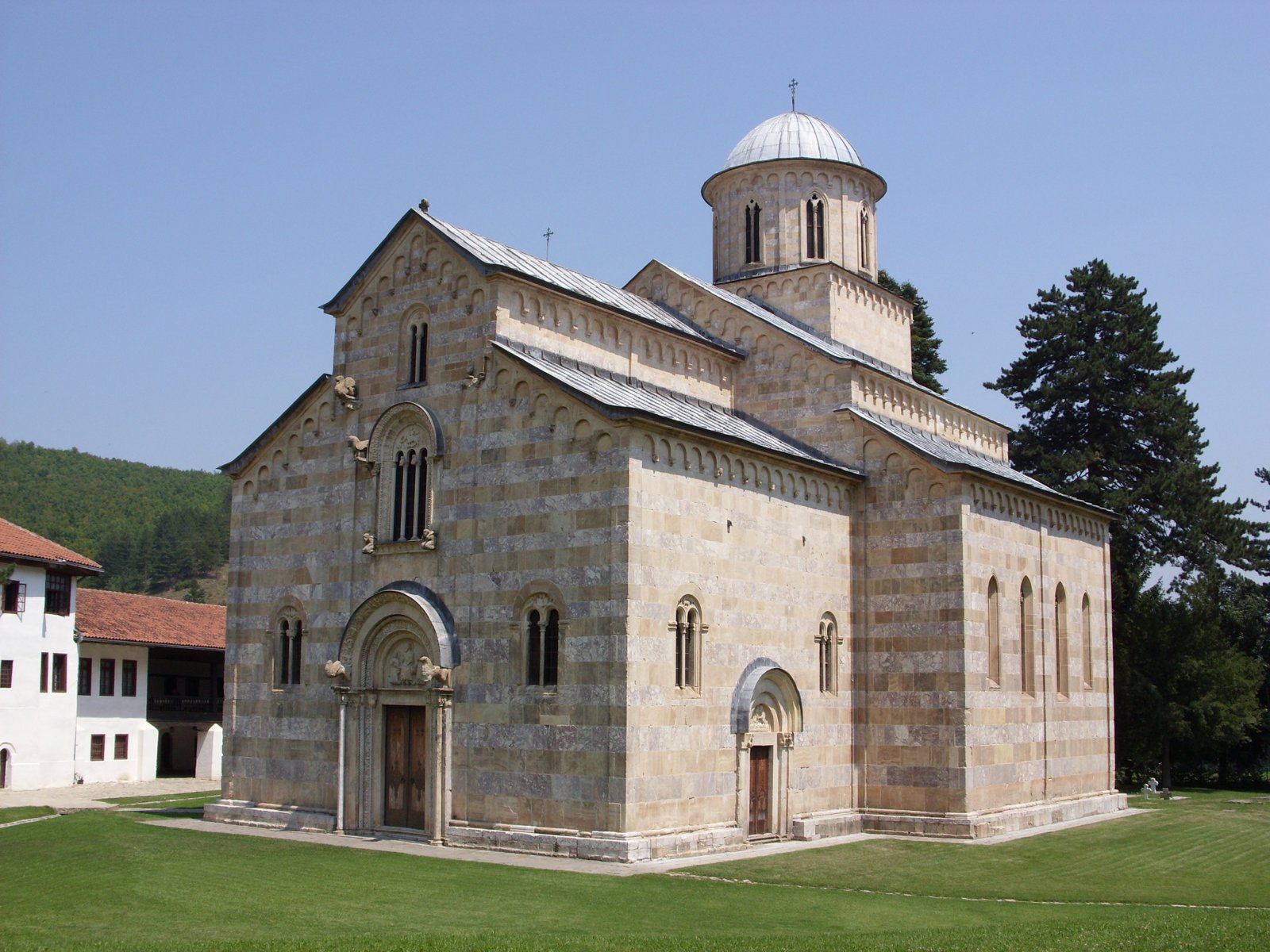
Visoki Dečani, whose land title Kosovo's Constitutional Court confirmed in 2016. Photo: Julian Nyča, Wikimedia Commons, CC BY-SA 4.0.
The verdict will be appealed. The families of the 96 now have a judgment naming who was responsible, and the brotherhood at Visoki Dečani still lives under the protection of NATO peacekeepers, more than two years after its land was finally registered.
Sources and Further Reading
Primary sources
- Kosovo Specialist Chambers, Prosecutor v. Hashim Thaçi et al., KSC-BC-2020-06, trial judgment, Sept. 16, 2026. https://www.scp-ks.org/
- Aidan Hehir, "Kosovo must rethink its faith in the West," Kosovo 2.0, Sept. 18, 2026. https://kosovotwopointzero.com/en/kosovo-must-rethink-its-faith-in-the-west
- Dick Marty, "Inhuman treatment of people and illicit trafficking in human organs in Kosovo," Parliamentary Assembly of the Council of Europe, Doc. 12462, January 2011, and PACE Resolution 1782 (2011).
- Special Investigative Task Force, statement of Chief Prosecutor Clint Williamson, July 29, 2014.
- International Criminal Tribunal for the former Yugoslavia, Prosecutor v. Limaj et al., IT-03-66, and Prosecutor v. Haradinaj et al., IT-04-84, including the appeals judgment of July 19, 2010.
- Basic Court of Priština, Medicus clinic case, EULEX prosecution, judgment of April 2013.
- Constitutional Court of Kosovo, Visoki Dečani Monastery, Case KI132/15, judgment of May 19, 2016.
- Carla Del Ponte, The Hunt: Me and the War Criminals, 2008.
- Robert Gelbard, United States special envoy, remarks in Priština, February 1998, as reported in contemporaneous wire coverage.
Scholarship
- Robert Muharremi, "The Kosovo Specialist Chambers and Specialist Prosecutor's Office," Heidelberg Journal of International Law (ZaöRV) 76 (2016): 967-992.
- Sara L. Ochs and Kirbi Walters, "Forced Justice: The Kosovo Specialist Chambers," Duke Journal of Comparative and International Law 32 (2022).
- Robert Cryer, "Witness Tampering and International Criminal Tribunals," Leiden Journal of International Law 27, no. 1 (2014): 191-203.
- Henry H. Perritt Jr., Kosovo Liberation Army: The Inside Story of an Insurgency, University of Illinois Press, 2008.
- James Pettifer, The Kosova Liberation Army: Underground War to Balkan Insurgency, 1948-2001, Hurst, 2012.
Reporting
- Human Rights Watch, "Under Orders: War Crimes in Kosovo," 2001.
- Human Rights Watch, "Kosovo: War Crimes Verdicts are a Step Toward Justice," Sept. 17, 2026. https://www.hrw.org/news/2026/09/17/kosovo-war-crimes-verdicts-are-a-step-toward-justice
- "Hague Prosecutors Seek Six Years for Kosovo's Thaçi for Obstructing Justice," Balkan Insight, Sept. 10, 2026.
- "Kosovo Assembly Approves Special War Crimes Court," Balkan Insight, Aug. 3, 2015.
- "Kosovo MPs Drop Initiative to Abolish War Court," Balkan Insight, December 2017.
- "Kosovo Organ Trafficking: Medicus Clinic Verdict," Balkan Insight, April 2013.
- "Kosovo Court Ruling Awarding Serb Monastery Disputed Land Implemented," Balkan Insight, March 20, 2024.
The case record of the Kosovo Specialist Chambers is available at: https://www.scp-ks.org/